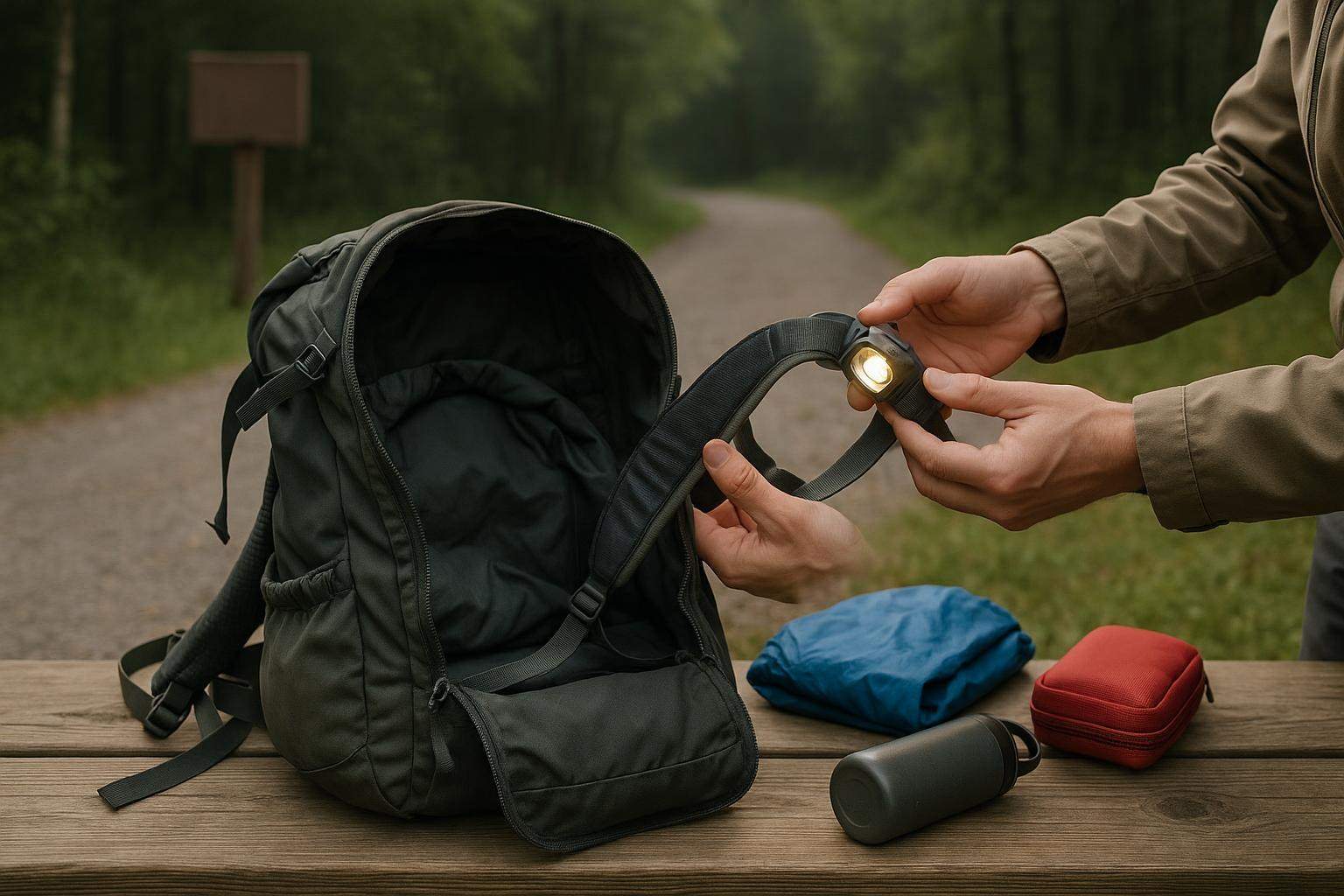
A day, in the field can go wrong before the vehicle leaves the driveway. A headlamp has batteries. A rain layer is missing. A pack contains versions of the item. The useful fix is not buying equipment. The useful fix is conducting a audit. The audit matches the load to the route. The audit matches the load to the weather. The audit matches the load to requirements. The audit matches the load to your ability to manage problems when plans change. Done well it reduces clutter. Done well it lowers stress. Done well it leaves attention for movement. Done well it leaves attention for wildlife. Done well it leaves attention for the land around you.
Start with the route, not the gear pile.
Lay out equipment after deciding what the day demands. A short walk on ground. A remote hunt. A steep route in weather. These require margins. Check the distance. Check the access points. Check the terrain. Check the expected temperature. Check the precipitation. Check the daylight. Check ways to communicate. If travelling with a partner agree on the route. Agree on the turnaround point. Do not assume everyone shares the plan.
Ask what could reasonably keep you out longer than expected. A warm layer. Water. Navigation aid. Light. Basic first-aid supplies. These usually earn their space. These address failures. Extra tools. Duplicate clothing. "Just in case" gadgets. These deserve scrutiny. Lightweight gear helps when it reduces bulk. Lightweight gear helps when it does not remove a safety margin. The lightest option is not automatically the best.
Inspect the items that prevent failures.
Most gear problems are boring until they become dangerous. Open every zipper. Flex every strap. Inspect buckles. Look for cracked housing. Look for stitching. Look for leaking seams. Look for flattened insulation. Test electronics before the trip. Test headlamps. Test GPS units. Test radios. Test power banks. Carrying an item that has not been switched on is an assumption of safety.
Pay attention to clothing and footwear. Check that rain protection still beads or sheds water. Check that socks are dry and intact. Check that footwear has tread and secure laces. A small hot spot can change how you walk. Address it before departure. Do not wait for pain on the trail. Pack one repair method suited to failures. Pack tape. Pack cord. Pack a fastening piece. Pack a -use tool. Avoid turning repairs into a second equipment collection.
Build a field safety checklist that earns its place.
A checklist works when it is short enough to use. A checklist works when it is specific enough to expose omissions. Keep it beside the pack. Keep it in a phone note. Review it after each trip. Review it while details are fresh.
– Route, access, weather and daylight checked
– Required permits, seasons, closures and land rules verified
– Water plan and food to the outing
– Navigation backup and tested
– Charged communication device, light and spare power as needed
– Clothing suited to changing conditions
– First-aid supplies matched to the group and route
– Emergency contact knows the plan and return window
– Pack, footwear and load-bearing straps inspected
– Waste, sanitation and wildlife-safe food storage considered
A checklist is not a substitute for judgment. If conditions deteriorate. If visibility drops. If a companion struggles. If the route no longer matches the plan. The right decision may be to turn around. Preparation should make that choice easier. Preparation should not encourage you to continue because the equipment is expensive. Preparation should not encourage you to continue because the schedule's tight.
Separate useful weight from comforting weight.
A pack often grows through anxiety. One more knife. A larger cooking system. Several spare garments. These may feel reassuring.. Weight costs speed. Weight costs energy. Weight costs footing. Sort each item into three groups. Necessary for the route. Useful for a contingency. Included from habit. The third group offers most of the savings.
Do not cut safety items merely to reach a pack weight. Reduce duplication instead. Choose equipment that serves than one purpose. A layer usable while moving and resting may be more valuable than pieces. A compact shelter or wind layer can make sense than relying on a forecast that may shift. The trade-off is personal. A solo traveller. Someone managing a condition. A group carrying shared equipment. These need margins.
Verify rules before entering the field.
Legal preparation belongs in the conversation as equipment. Seasons. Licenses. Access permissions. Fire restrictions. Transport rules. Harvest requirements. Closures. These can change. A familiar location may follow rules from the one door. Check information from the land manager. Check information from wildlife agency. Check information from official authority before leaving. Carry required documentation in a form. Understand boundaries affecting the route.
Do not rely on a screenshot. Do not rely on a friends memory. Do not rely on a seasons routine. If guidance is unclear. Contact the authority for the land or activity. Record the answer. Treat verification as part of every trips preparation. Treat verification as not a one-time task.
Let the audit include your impact.
A lighter pack is one measure of a day. Consider how the outing will affect habitat. Consider how the outing will affect wildlife. Consider how the outing will affect visitors. Stay on surfaces where appropriate. Avoid disturbing nesting or denning areas. Pack out all waste. Manage food or scented items so animals do not associate people with meals. Follow restrictions on fires. Follow restrictions on vehicles. Follow restrictions on dogs. Follow restrictions on access routes.
For hunting ethical preparation also means knowing the land. Identifying the intended target with certainty. Being willing to pass when conditions do not support a decision. Equipment cannot replace judgment. Check whether the route crosses property. Check whether the route crosses restoration work. Check whether the route crosses a closure. Respecting those limits protects access and conservation beyond one trip.
Before loading the vehicle remove one item you cannot explain. Test one item you normally assume will work. That pause often reveals the difference, between carrying a collection of gear and carrying a system. The goal is not to eliminate every inconvenience. The goal is to leave with equipment, information and habits that support a return. The goal is to leave with equipment, information and habits that support a touch on the places that make the outing worthwhile.